
Building Pathways to Careers in Energy
KEYWORDS: Career Pathways, Career and Technology Education, Makerspace, Specialist High Skills Majors, Mentorship, Enskillment, Positive Youth Development
DESIGN TEAM: Eve Tulbert, Ala’ Diab, Jim Kropp, Monica Swope, with the Chicago Learning Exchange (CLX),Chicago Public Schools CTE, and the Illinois Science and Energy Innovation Foundation (ISEIF)
What does it take to climb up a utility pole to fix a power outage? Or to install a solar panel working on a collaborative team? The Illinois Science and Energy Innovation Foundation (ISEIF) wanted teens across Chicago to find out. Leading the design for a multi-organizational collaboration, we created the curriculum and media for Illuminating Energy Pathways, a hands-on, skills-based program that helps teens experience career paths in our changing energy grids.
Preparing students for careers is a mission-critical objective for school districts around the world. As cognitive scientists have pointed out, youth learn new skills through mentorship during compelling hands-on challenges (Ingold, 2000). Research shows that the best career and technology education (CTE) programs do this by creating real-world experiences that pique student interest and offer clear paths to multiple jobs within a sector (Lindsay et al, 2024).
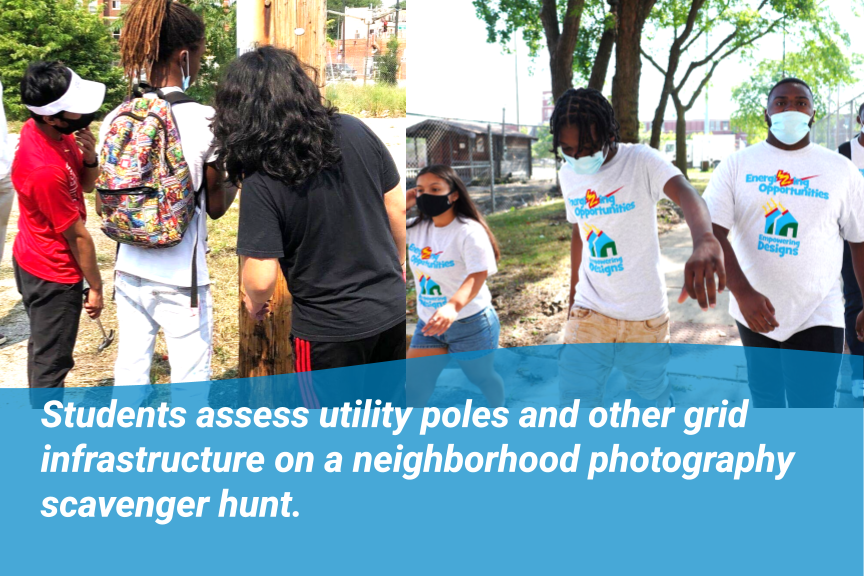
Students assess utility poles and other grid infrastructure on a neighborhood photography scavenger hunt.
The energy sector is fast growing and rapidly changing. Right now, energy companies are seeking new, diverse workers to build the grids of the future. The goal of the Illuminating Energy Pathways initiative was to create engaging pathways towards next generation energy sector leaders through inspiring opportunities to think like an expert.
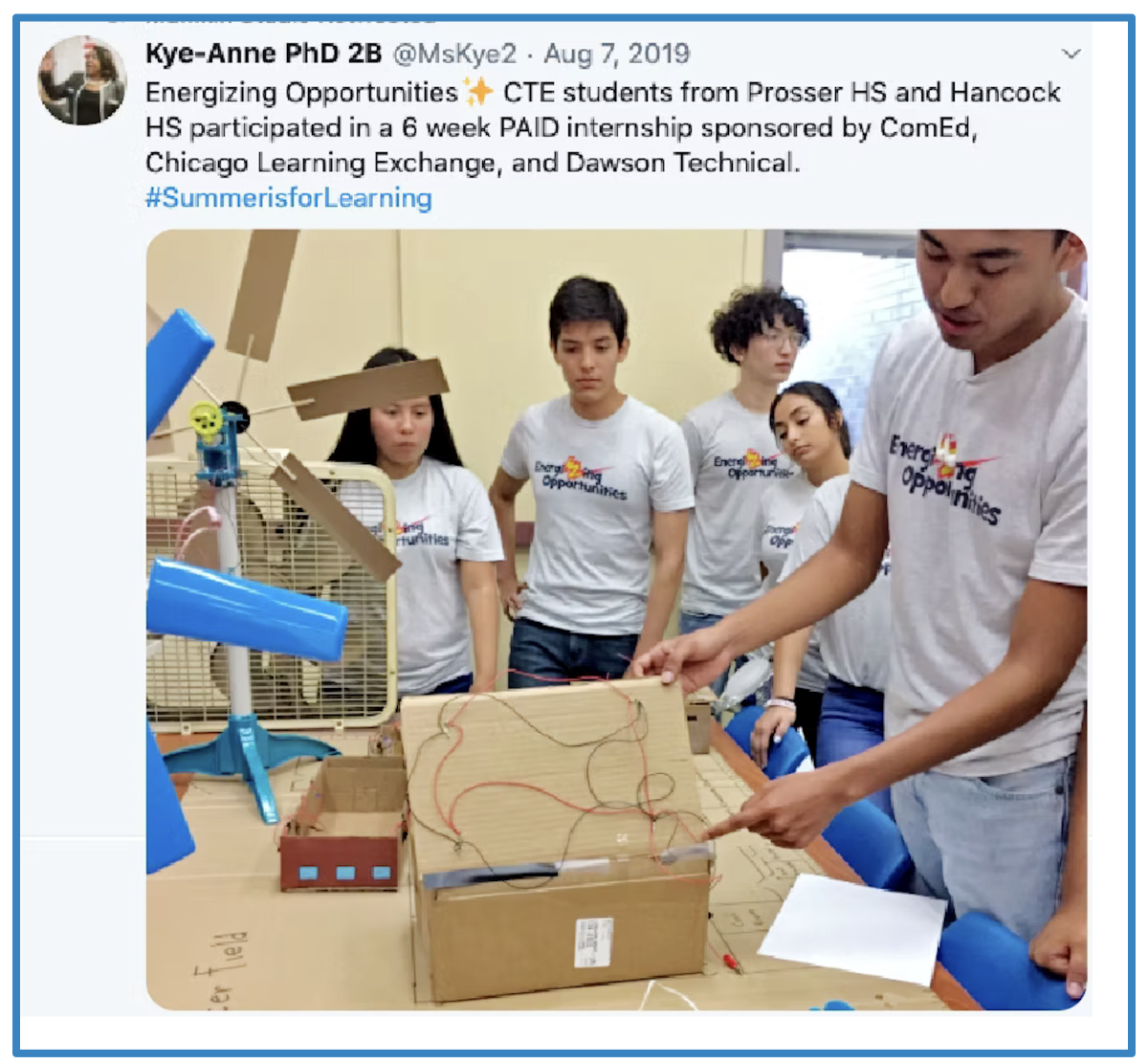
We began with consulting expert trainers at energy utility companies, working closely to develop the content for this scalable teen apprenticeship program. In the Energizing Opportunities curriculum, students try new skills that incorporate tools, materials, and physical challenges together.
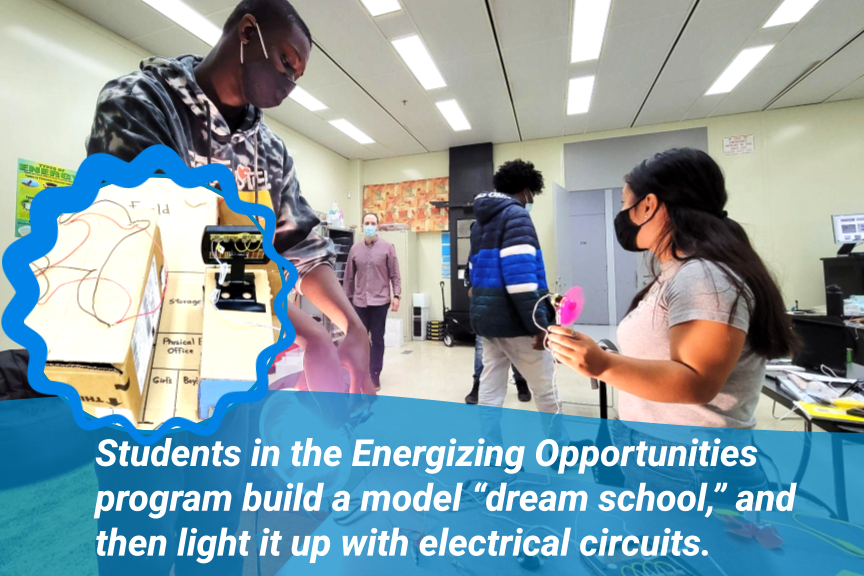
Students in the Energizing Opportunities program build a model “dream school,” and then light it up with electrical circuits.
We adapted real-world, pro-level training materials into fun team challenges designed for teens. Students learned skills such as how to inspect utility poles and report findings, how to climb ladders while safely balancing loads, and how to apply three-way communication protocols to solve challenges collaboratively.
“In school...they give you instructions and you have to follow every single thing. Here, you’re given a basis of what you have to do, and then it’s your thing all the way through. For the Dream School, we designed what we wanted. All [the instructor] said was ‘Okay, now it has to run on renewable energy.’ We got to put our own thoughts into our school.” --Student Participant
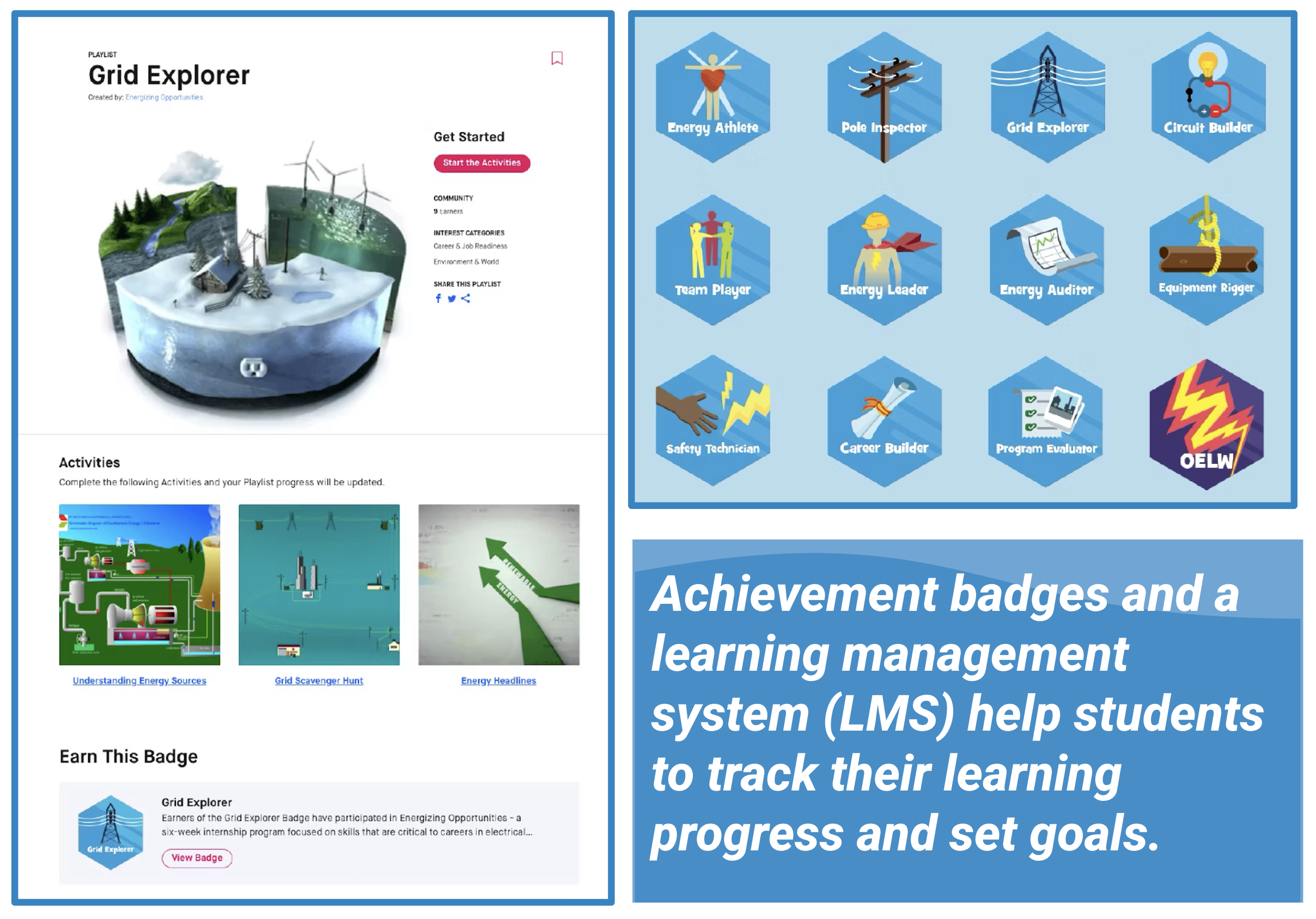
Achievement badges and a learning management system (LMS) help students to track their learning progress and set goals.
To create a space to learn these hands-on skills, we turned classrooms into portable, modular, makerspaces...places where learners tinker and solve real challenges. In the classrooms, teen teams design a model “dream school,” and then add circuits and sustainable energy sources to power the lights in their model, exploring the physics of energy along the way. Then, learners explore the grid in the neighborhood. The Electrical Grid Scavenger Hunt, for example, teaches target vocabulary through a fun city walk and photography.
Tough challenges build soft skills. Expert engineers and lineworkers told us that energy careers require hard work and great communication skills. Daily team workouts and equipment rigging games teach both.
From the web, to the schoolyard, to the community, career pathways are about adventure and curiosity. In the Energizing Opportunities program, youth learn how to try and succeed on a team.
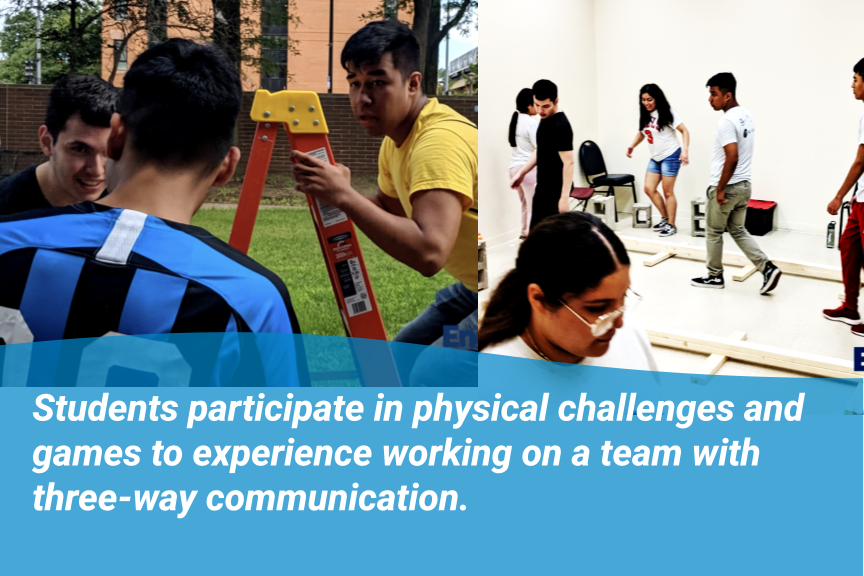
Students participate in physical challenges and games to experience working on a team with three-way communication.
The Impact
The Outlier Research and Evaluation team (University of Chicago) conducted an extensive program evaluation of Energizing Opportunities. Their reports revealed high-levels of youth engagement...and a new model for teen engagement in utility careers.
Youth highlighted their excitement about teamwork challenges, clean energy possibilities, and an exposure to lucrative career paths that might criss-cross the trades and college.
“I think Energizing Opportunities is awesome! It needs to be done again and again...We have the overhead electrical line workers for ComEd...What about the people that work for the water department, what about the people that work street sanitation, what about construction? This is something that needs to be bottled and replicated multiple times in multiple fields. I think it's awesome…We need to keep doing it. It's an amazing program. The curriculum is great. It’s a tremendous opportunity for our CPS students.” -- Kye-Anne Wilborn, director of Chicago Public Schools CTE
Citations & Links:
Ingold, T. (2000). The Perception of the Environment: Essays on Livelihood, Dwelling and Skill. Psychology Press.
Lindsay, J., Hughes, K., Dougherty, S. M., Reese, K., & Joshi, M. (2024). What We Know about the Impact of Career and Technical Education: A Systematic Review of the Research. Career and Technical Education Research Network.https://eric.ed.gov/?id=ED674303