
Creating DialoGo!
KEYWORDS: Social Emotional Learning, Reflective Listening, Inter-Religious and Inter-Cultural Dialogue, Facilitative Leadership
DESIGN TEAM: Eve Tulbert, Ala’ Diab, with the KAICIID Dialogue Centre and the World Organization of Scouts Movement (WOSM).
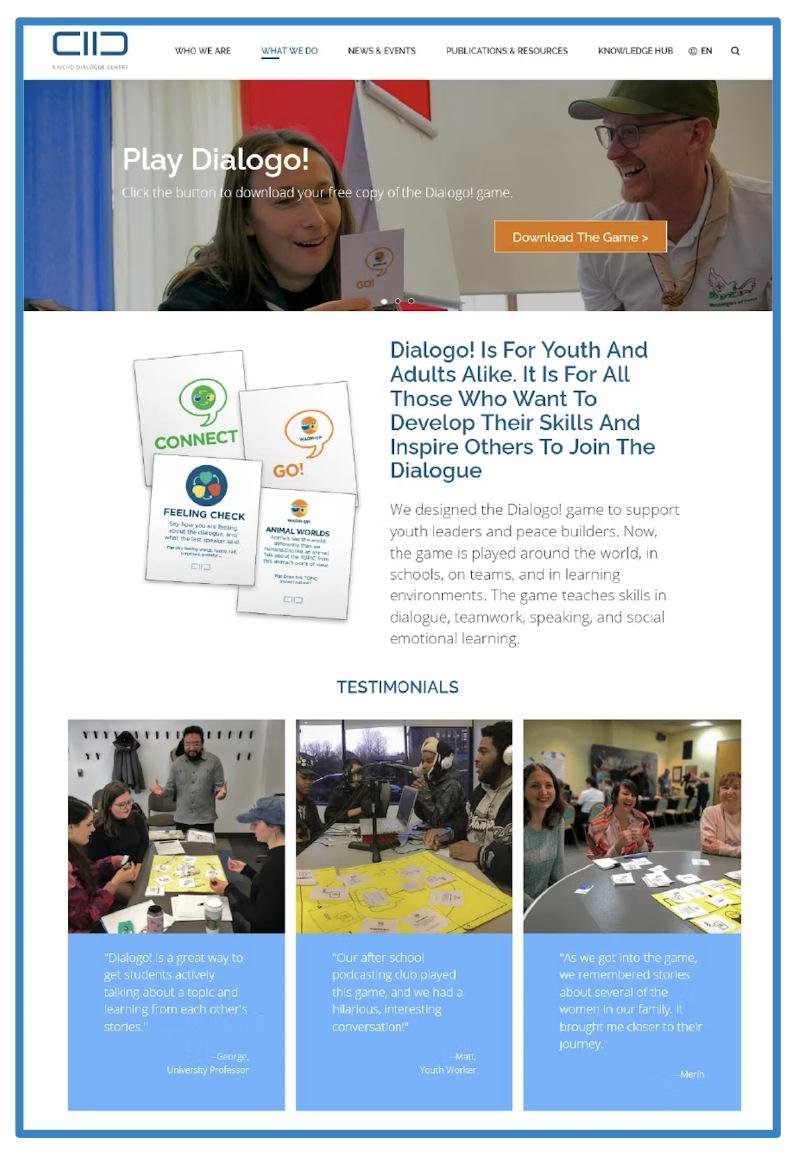
DOWNLOAD THE GAME: https://www.kaiciid.org/what-we-do/dialogo-game-learning-dialogue
Learning to listen is one of life’s fundamental skills. But it doesn’t come easy for most of us. That’s why a partnership between World Organization of Scouts Movement and KAICIID Dialogue Centre led to a novel idea: Let’s create a game based curriculum and scouting badge for intercultural communication and peace building.
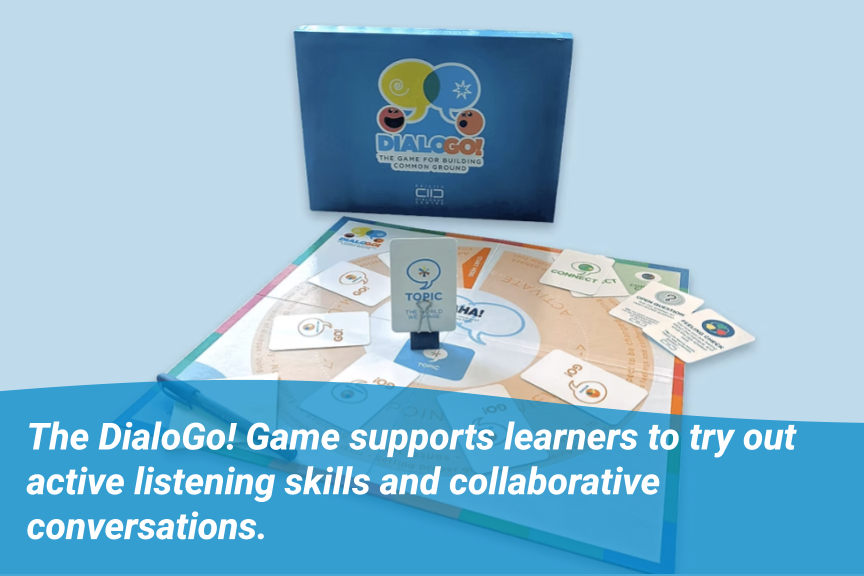
The DialoGo! Game supports learners to try out active listening skills and collaborative conversations.
Imagining a new dialogue badge?! Absolutely! The effort would span 3 years of design and prototype testing. Hundreds of participants engaged in dozens of fun and exciting play-tests in countries around the world. We worked together to create a fun, skill-building dialogue game that helps youth succeed at collaborative communication. Working with a range of children, teens, and adults across languages and cultures helped to create a game that supports facilitation skills in many languages. We were delighted to dialogue with so many amazing individuals who shared their stories and ideas!
In DialoGo!, there is no way to win…you can’t argue your way to the top. Instead, the group of players gets to the end when they have listened and communicated with their team mates to hear many points of view on a topic.
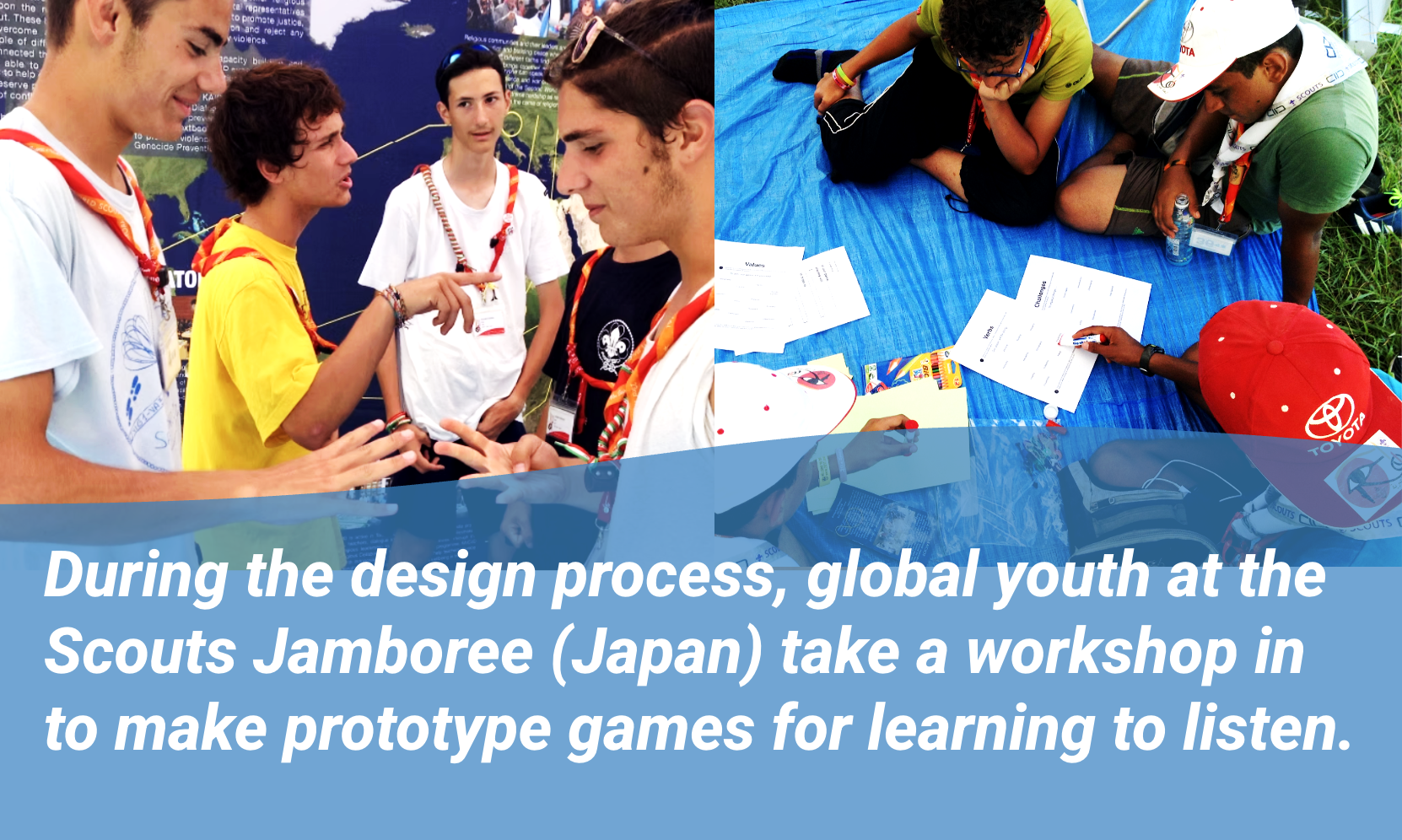
During the design process, global youth at the Scouts Jamboree (Japan) take a workshop to prototype games for listening skills.
Creating the DialoGo! game helped our team to learn more about the barriers youth face in learning to listen and dialogue. No one is born a leader. Most of us have difficulty knowing when to speak and when to be quiet. We stress out about how we sound, how we look, our and our language skills– especially when we’re leading with others. But everyone has something to say somewhere and some times. How do we build creativity, excitement and participation while we try out new strategies for communication?
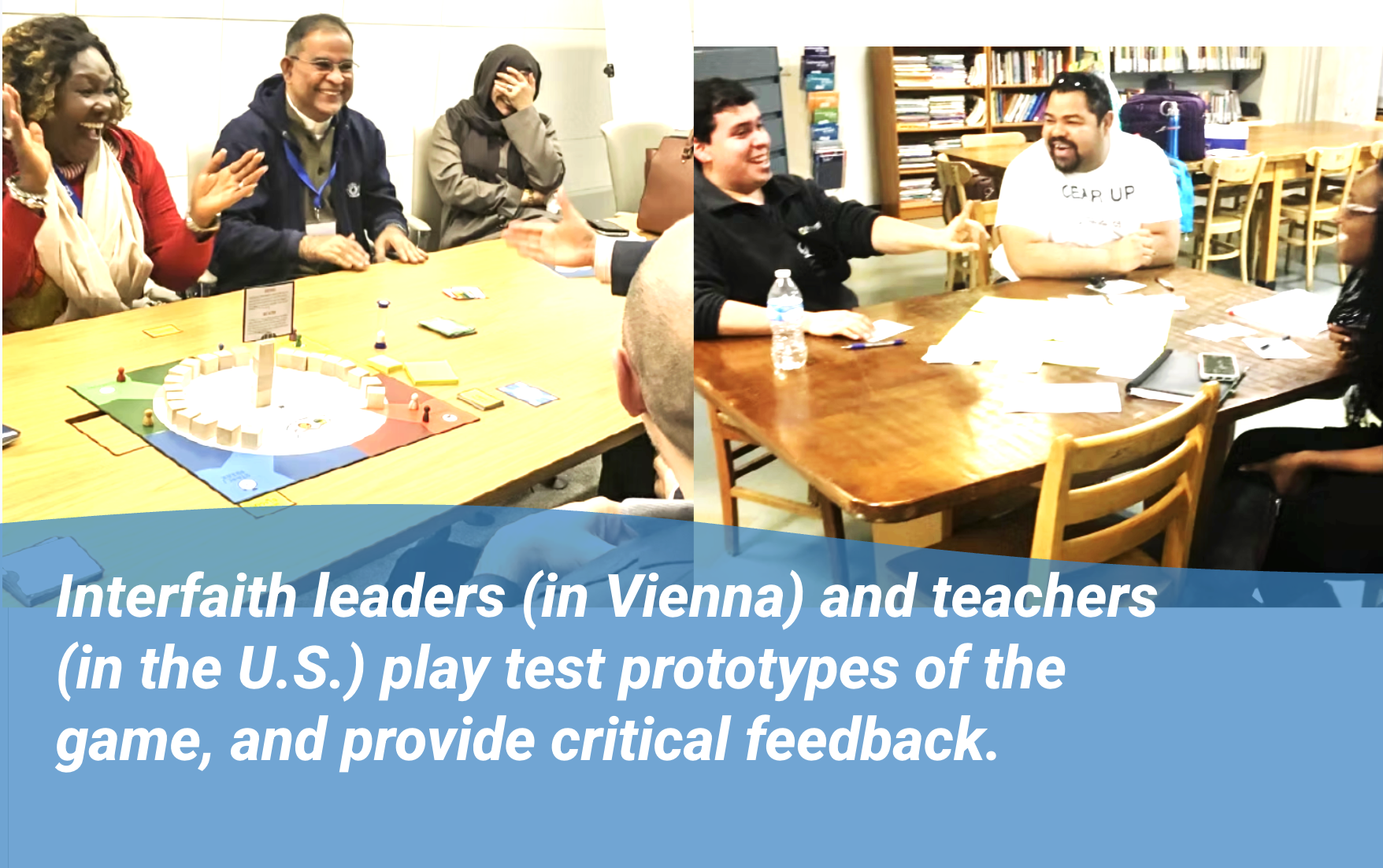
Interfaith leaders (in Vienna, left) and teachers (in the U.S., right) play test prototypes of the game, and provide critical feedback.
Knowing how to listen deeply and share our thoughts well requires core social emotional skills. We need to manage our attention, organize our thoughts, and find ways to think creatively working with others.
The design of the DialoGo! Game helps players to explore these skills, helping players to choose a Topic and stick with it, to regard the Topic from different points of view, and to apply fundamental tactics for listening deeply to coax out the ideas of other participants.
Over the course of the design process, we learned helpful lessons in design for learning that can apply to any project. 1) begin with play, 2) think about trajectories of skill development, and 3) cut your “darlings” to refine the final product.
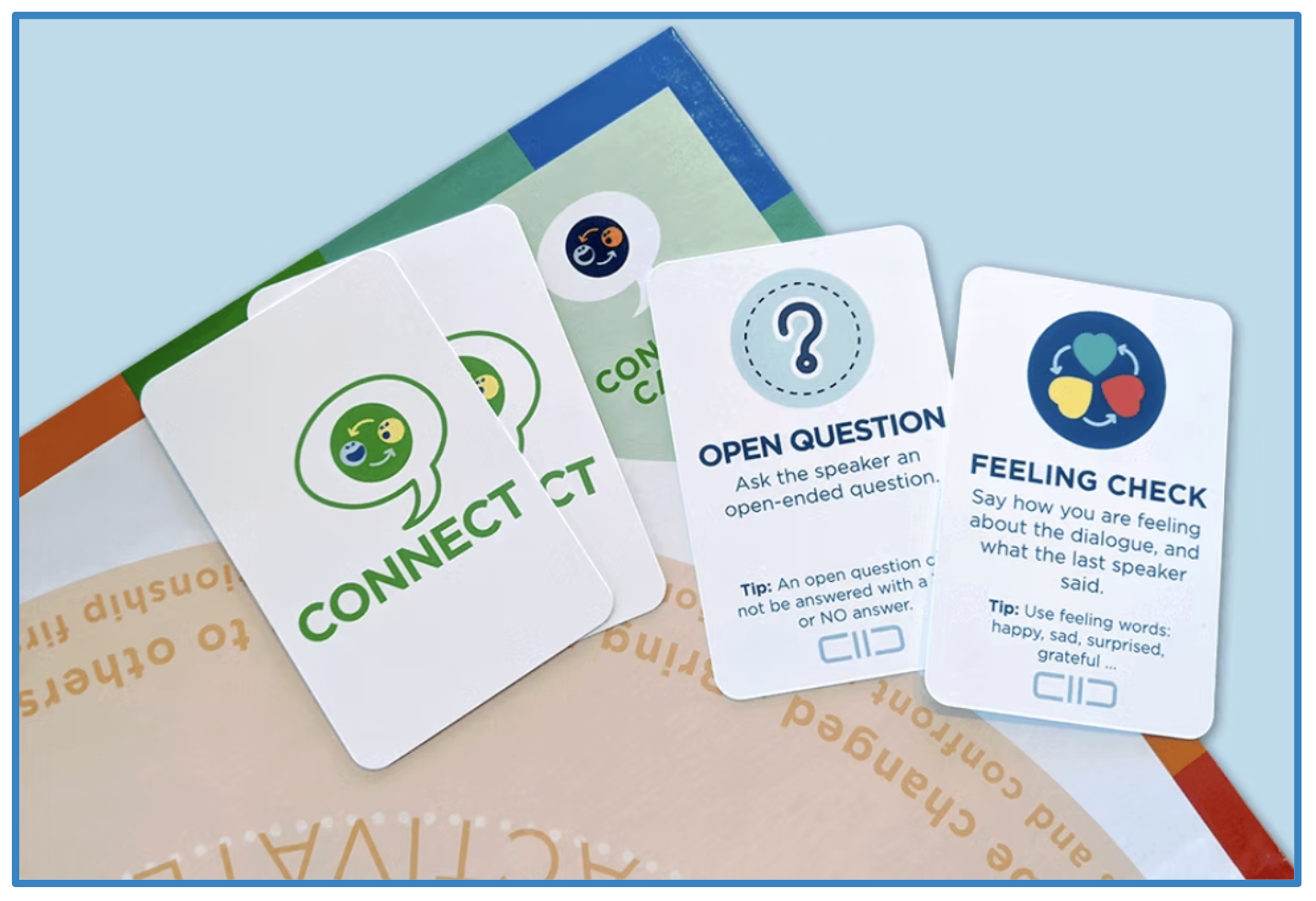
Game cards help players learn useful skills for active listening and requesting information.
The Impact
By creating new ways to distribute programming and educational content, the DialoGo! Game built capacity and success. With the mission of teaching dialogue skills around the world, the KAICIID Centre aimed to expand the impact of trainers through innovative partnerships. A portable, fun to use dialogue game became a touchstone in multiple programs and efforts. KAICIID quickly translated the game into eight languages for international distribution. Soon, new organizations and networks got on board, integrating the game into programs, and supporting new groups to give dialogue skills a try.
An extensive third party evaluation supported the expansion of this training strategy. Tests showed that more than 9 out of 10 players would recommend the game, play it again, and commit their organizations to buying copies. Game players’ highlighted how they could integrate DialoGo! into their existing programs.
Through sharing dialogue skills in a fun and playful way, the DialoGo! game brings core tools for peace-building to the next generation.
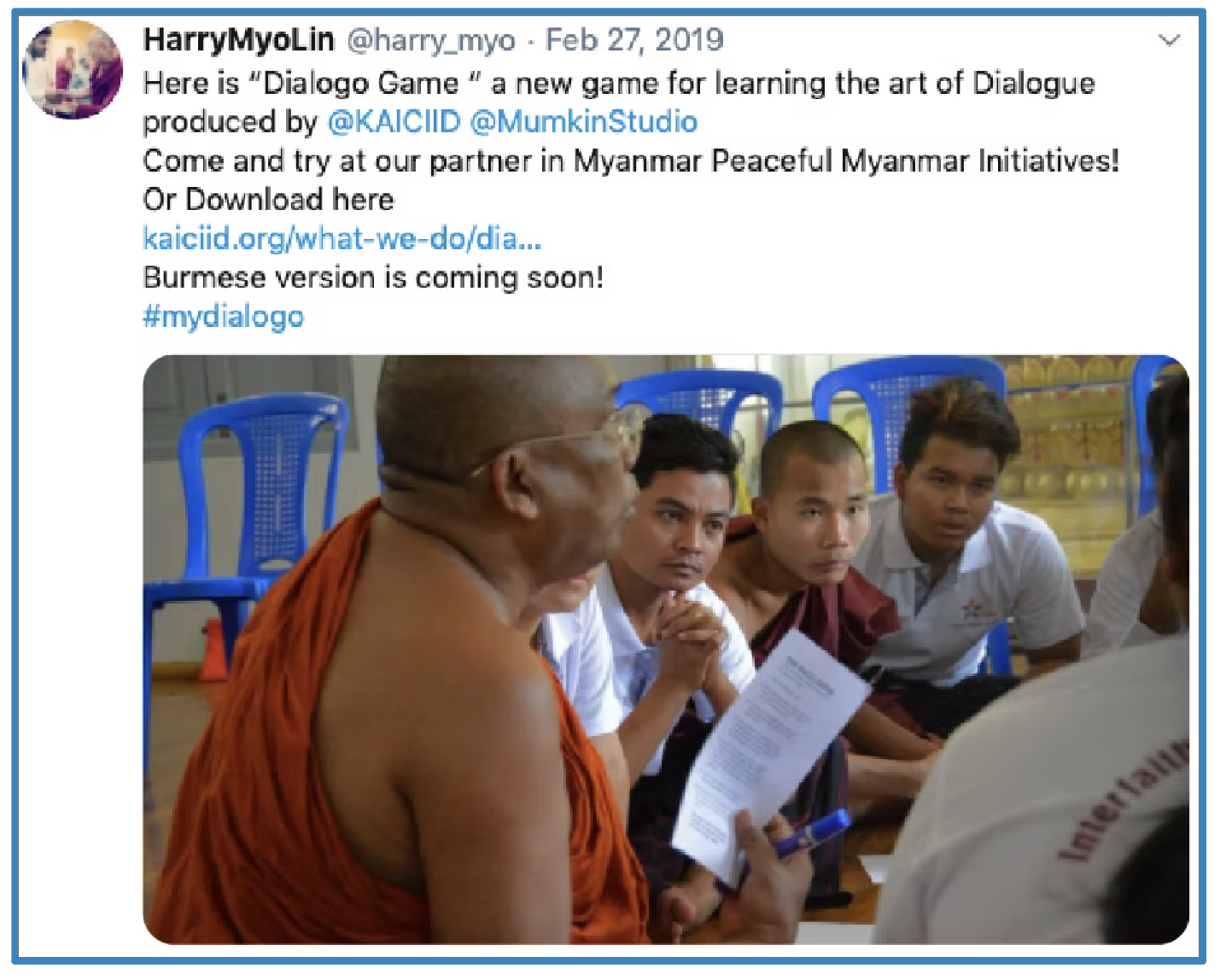
Faith and youth leaders try out the game in Myanmar.
“This could be a program we introduce to schools...and ultimately institutionalize on a ministerial level.” — UNESCO Leader
Three Lessons Learned from Designing DialoGo!
Begin with play. Soliciting ideas through rapid prototypes. To create DialoGo!, we begin with play. The creation process started at the 2015 World Scouts Jamboree. There, hundreds of youth participated in co-design workshops. They created their own prototype games to explore dialogue in inter-religious groups. Brainstorming led to rapid prototypes. Stakeholders added their visions to the next step of product creation.
Think in skills. Design a taskspace for distinct skills. Building the game, we knew we were designing for a special audience: youth who live in conflict zones. We knew that, over time, their dialogue skills could matter in the outcomes of peace tactics and violence tactics in some of the world’s most difficult situations. Looking at their interesting prototypes, we realized that we needed to ensure that the whole group would keep focused attention on one topic, The Topic card, placed in the middle of the board, helps the players to make collaborative contributions. The stack of slips of paper with New Ideas helps to keep people speaking and thinking towards the same shared objective. An important question for instructional design is: How do we divide this content area into a set of core skills that are explored through a taskspace. Anthropologists of cognition and social scientists have called this a process of enskillment in a taskspace. By examining the components of skills – like taking turns, asking each other questions, and sticking to one Topic, we help to build skills that can cross contexts. (Grappuso & Whitehouse, 2020; Ingold, 2000)
Play-testing means cutting and editing. Identifying ideas for improvement is part of the process. We created “print and play” versions of the game, and then tested them in diverse settings: schools, youth arts clubs, and teacher professional learning seminars. Some writers say that a story is only good when we chisel away at what’s not needed. They “kill their darlings”-- cutting favorite lines and scenes– to make the final product more engaging. Curriculum and Game designers need to do the right thing. In the first prototype of Dialogo!, we play-tested a version that had a different set of cards. These were cards about Virtues in many languages and cultures, and players could award them to one another as they spoke. At one of the first playtests, an especially perceptive player helped us to cut this idea altogether. She said, “I see why it’s interesting to learn about global virtues…but awarding them to one another can highlight power dynamics and one upsmanship in the group…it takes away from the sense that we are all working together.” We knew right away that she was right.
DOWNLOAD THE GAME: https://www.kaiciid.org/what-we-do/dialogo-game-learning-dialogue