
Design for Learning
KEYWORDS: Universal Design for Learning (UDL), Learning Experience Design (LXD); Design-based Research (DBR); design thinking; program evaluation
Schools, museums, and public learning initiatives all require thoughtful and strategic approaches to design. Whether it’s a pop-up exhibit on health and the climate, or a multi-year energy career pathways program, learning initiatives have to study how they support new ideas and skills. Learning designers use practices from design thinking and program evaluation together to invent educational adventures with measurable impacts. Design for learning can mean using ideas from learning theories to build and test new games, curricula, classroom workflows, and even school policies. Ideation and prototyping, thoughtful implementation, and data-driven evaluation are key components of design for learning.
Youth program leaders learn design thinking skills at a Mumkin Studio workshop, courtesy of Chicago Learning Exchange.
There are many entryways into design for learning. Key ideas include:
1) Design-based Research (DBR): applying the learning sciences to innovate in curriculum design and school policies unfolding in complex learning communities. (Brown, 1992; Collins, 1990; DBR Collective, 2003, Sandoval, 2004)
2) Universal Design for Learning (UDL): creating educational spaces and programs that serve the natural diversity of minds, often using strategies from design thinking. (Hitchcock et al, 2002; Rose & Strangman, 2007)
3) Learning Experience Design (LXD): implementing design tools, including Human Computer Interaction, to create and test experiences such as learning games and on-line courses. (Floor, 2023)
4) Program Evaluation: the systematic and data-driven approach to studying the impacts of a program or policy on a community. (Newcomer et al, 2010)
Each of these “schools of thought” has its own wisdom– including its core methods, founding research studies, and points of focus. But these different schools do converge on a key point: educational leaders need strategic tools to create, implement, and improve programs with key learning outcomes in mind. This post will outline the history, key ideas, and benefits of each school of thought.
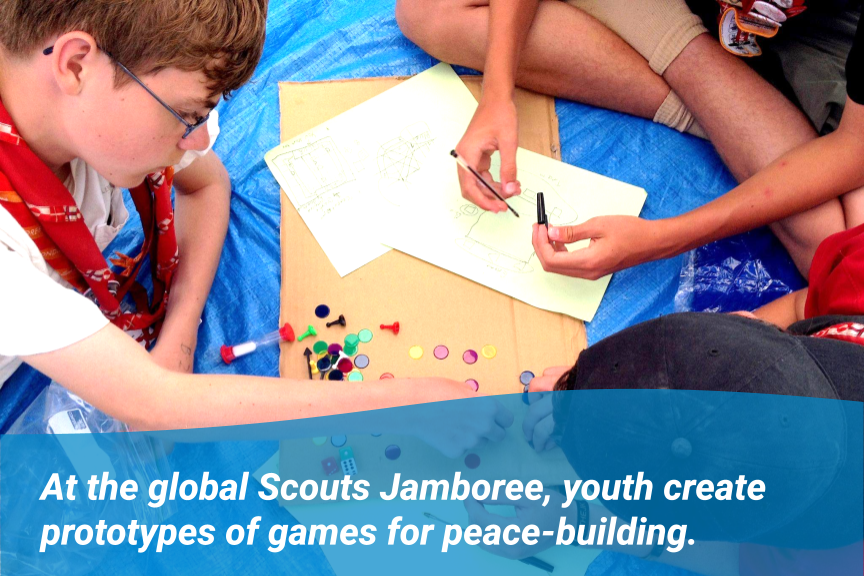
At the global Scouts Jamboree, youth create prototypes of a game for peace building.
School One: Design Based Research
Design-based Research (DBR), or “design-based implementation research,” applies design thinking tools from engineering to complex classroom contexts. DBR makes a pivot from earlier laboratory-based approaches to cognition (Brown, 1992). Founding design-based researchers in education to try out design research methods in order to practically get to solutions– innovations in curriculum and teaching practices– that could support more students, teachers, and schools. Educational praxis, they argue, is more like tinkering and inventing than it is like running medical trials research. They ask: how can we invent new ideas in curriculum and instruction, and then closely look at their effects in learners’ thinking in the real world?
Founded by collaborative teams, and working often with teachers as co-researchers, DBR inventors / engineers have developed key ideas that are now used widely in global classrooms. For example, TEAM the practice of “anchoring instruction”-- or getting started by introducing a fascinating phenomenon that learners’ then explore through life experiences, dialogue and hands-on experiments. DBR researchers seek to connect conjectures about cognition and learning with ethnographic accounts about how new pedagogical approaches work (Sandoval, 2014). DBR researchers have also taken on complex design challenges in school and state policies, and the “infrastructuring” work needed to guide school change (Penuel, 2019)
“A number of questions must be addressed…How sustainable is the design after the researchers leave? How easy is it to realize the design in practice? How much does the design emphasize reasoning (as opposed to rote learning)? How does the design affect the attitudes and motivation of teachers and students? How much does the design encourage students to help other students learn?” – Allan Collins, 1990

Play testing an augmented reality table for building models of chemical engineering plants. At the University of Rochester, Get Real Science and The White Lab.
School Two: Universal Design for Learning
Universal Design for Learning (UDL) is a cornerstone of instructional design in both K-12 and higher education. Universal Design (UD) began as a movement in the architecture of public spaces, focusing on creating inclusive environments that serve the needs of many types of people. In education, UDL draws on research in cognitive science to serve neurodiverse learners, including multilingual students. In UDL, we ask, how can we create experiences that engage and support all types of learners?
UDL was founded by the groundbreaking work of the CAST center, and researchers David Rose and Ann Meyer, among others (Hitchcock et al, 2002; Rose & Strangman, 2007) The creators of UDL employ frameworks for considering how multiple neural networks operate in the course of learning new ideas. Practitioners bring attention to the many ways that educators can design experiences that support learners with multiple means of engagement, representation, and active expression. The practice supports learners to connect with content and demonstrate their knowledge in diverse ways, reducing barriers to participation. Now, UDL is implemented in schools and nations around the world.
“Instead of pretending that somewhere is a perfectly “normal” brain, to which all other brains must be compared, we need to admit that there is no standard brain, just as there is no standard flower…Diversity among brains is just as wonderfully enriching as biodiversity and the diversity among cultures and races.” – Thomas Armstrong, 2012
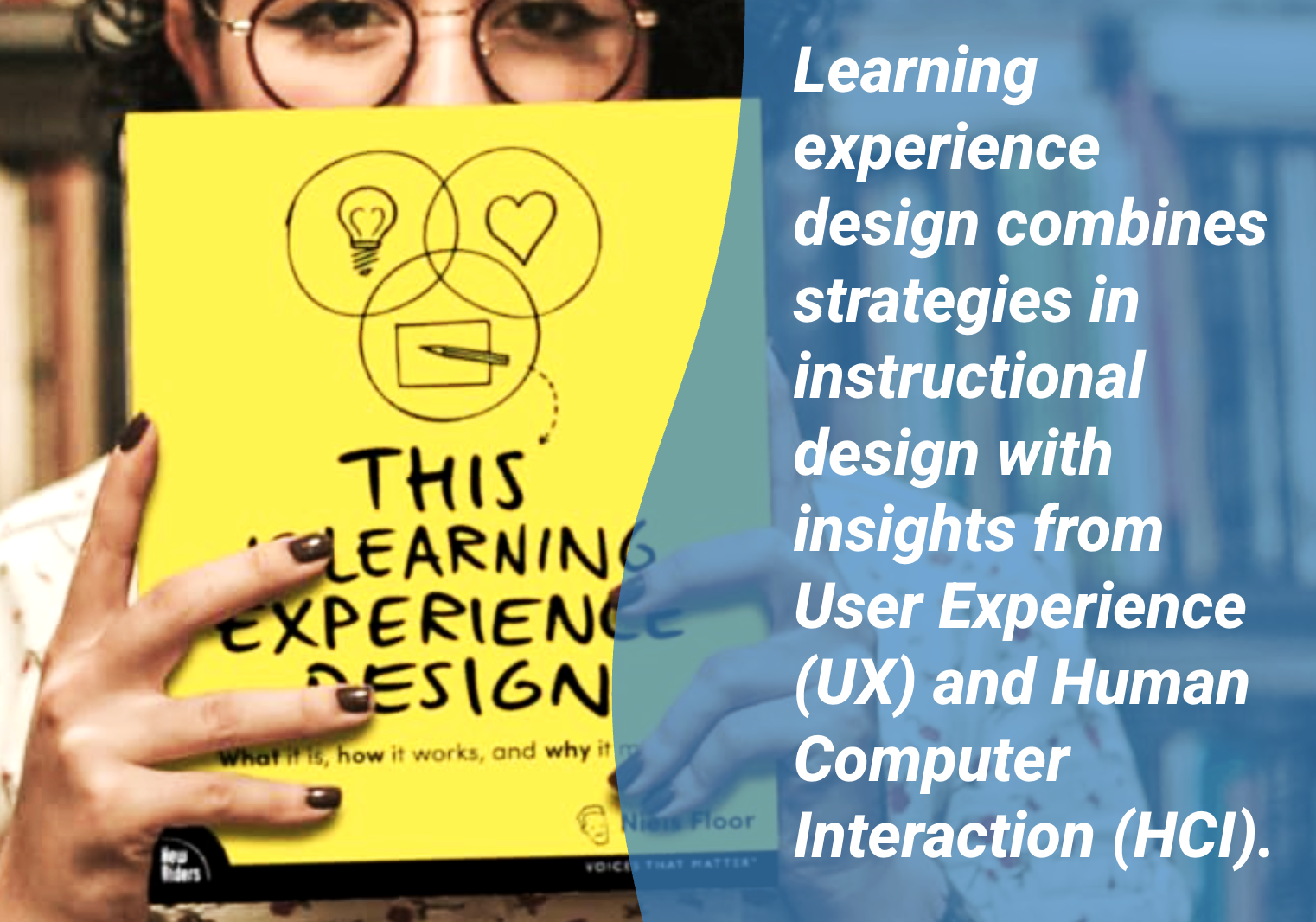
Learning Experience Design combines strategies in instructional design with insights from user experience (UX) research and human computer interaction (HCI).
School Three: Learning Experience Design
The term Learning Experience Design (LXD) is used frequently in the creation of educational technology, on-line learning spaces, and games for learning. LXD draws on both user experience (UX) tools and research, and also on service design principles, asking, how can we make the best possible experience for learners who we want to engage?
The LXD field grows out projects that unite instructional design principles with user experience (UX) for technologies (Floor, 2023). The field creates a bridge between innovations in the design science of Human Computer Interaction (HCI) with questions and challenges in human cognition. As such, LXD helps educators to link their uses of educational technologies with the learning goals that shape their ideas.
School Four: Program Evaluation
Program Evaluation entails the systematic collection of data and feedback in order to illuminate pathways to changes and improvements. Program evaluation is a field in itself…and also a set of practices that assist in generating new ideas and studying learning programs in motion (Newcomer et al, 2010). Program evaluators use community engagement, and mixed-methods in social science research to ask: How can we study the outcomes of this program on the people it serves, and how can we make changes to help it work better?
Program evaluation grows from the need to carefully study how complex programs (and also policies) work on the ground. The aim is to make improvements and add value, including stakeholders in the process of research and changemaking. Program evaluators can be internal or external to a project team, but ideally, the evaluation plan (data collection, rich feedback, communicating with stakeholders) is embedded in a larger plan for designing new ideas.
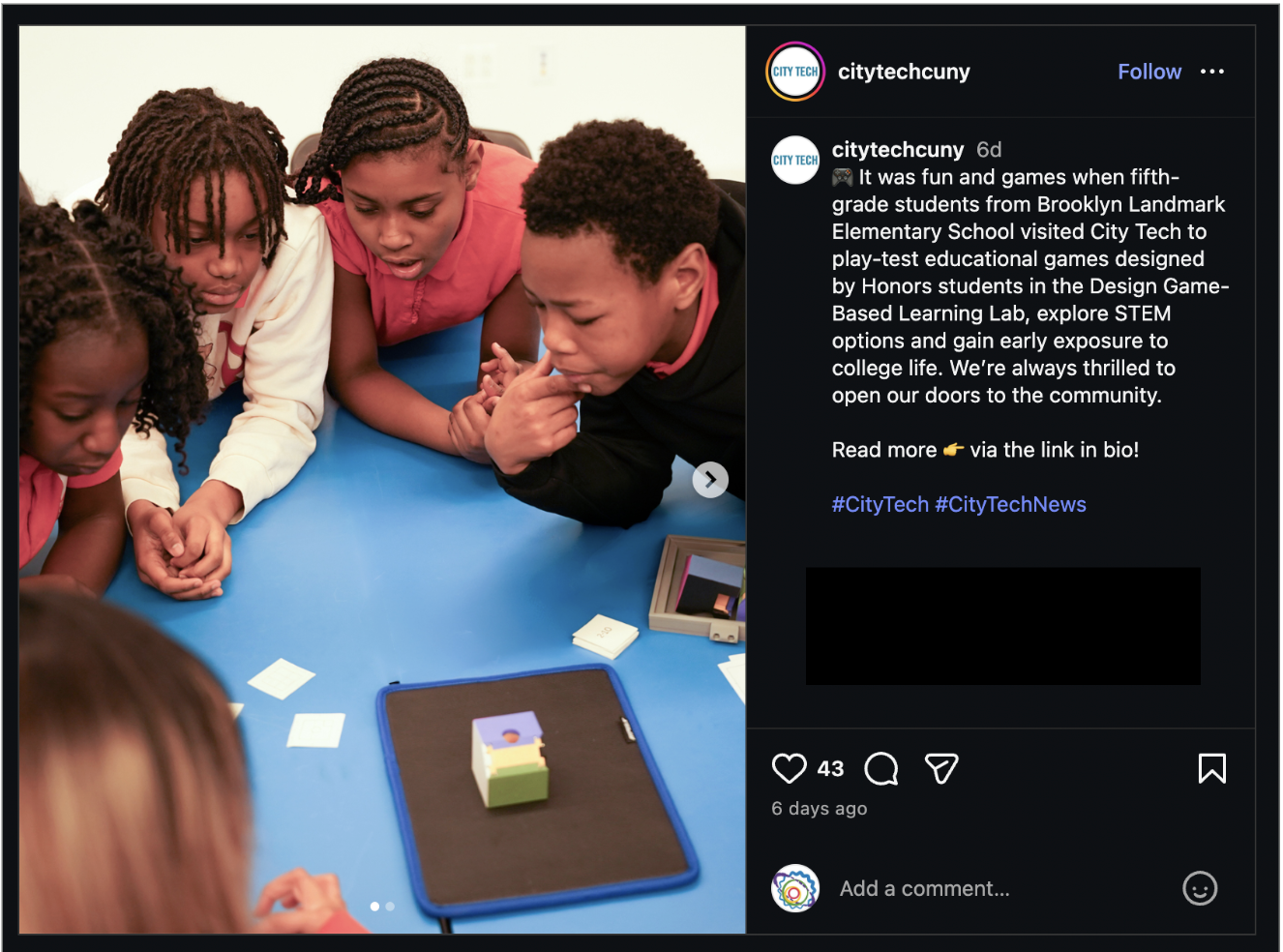
Play testing games for STEM learning at the Interdisciplinary Design Game-Based Learning Lab, CUNY Open Lab.
Convergence Points
These different schools of design for learning overlap and learn from each other. But there are techniques and ideas that tie them together. These include studying learning and curriculum innovation within complex contexts, and including diverse participants in cycles of feedback and evaluation.
Get real feedback from learners. Try strategies like photovoice or playtestingto engage learners. Design for learning uses research and feedback to solicit the opinions of people that matter most: the learners and teachers that will benefit from the innovation. Research techniques like photovoice support learners to express their thoughts about a program. Designing feedback during implementation allows educators and design researchers to make pivots–changes that improve the experience.
Create diverse, collaborative teams to invent new ideas. Ideation means working together to generate new ideas and points of view. Extensive research in design thinking suggests that ideation is more powerful with diverse stakeholders.
Become a systems thinker. Design with complexity and context in mind. Education programs are happening within complex systems. These can include the “ecological systems” that make up youth identity development, as well as the systems and routines that form organizational and school districts policies. How does a new innovation unfold across multiple levels of a system or a network? Design researchers use tools to document the context of the new idea…at times, seeking to impact the infrastructure (routines, protocols, policies) that impact the core result (see Penuel, 2019). Check out this Ecosystem Map protocol to learn more…
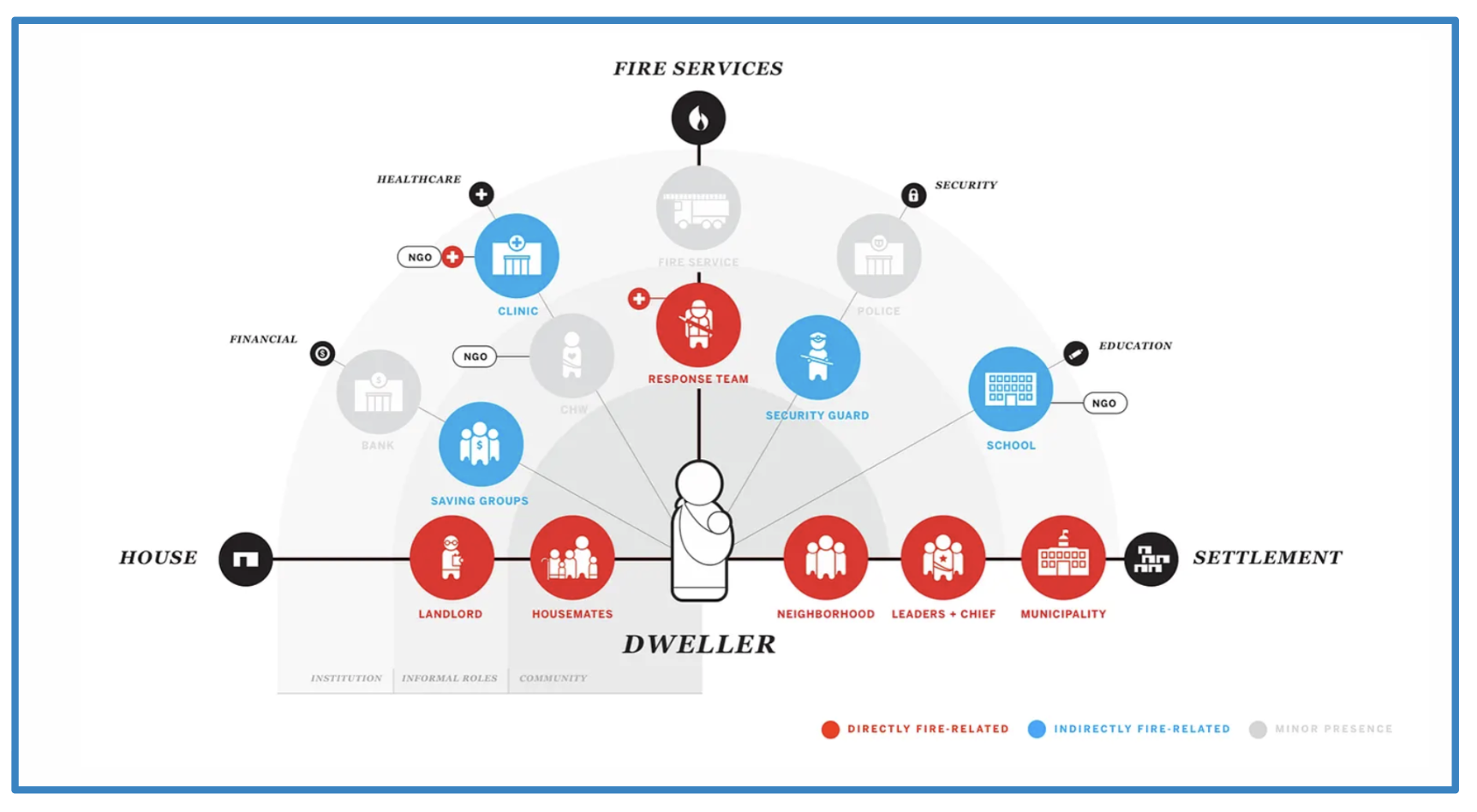
A systems map of the fire response system in Cape Town, South Africa.
Citations & Links…
Brown, A. L. (1992). Design Experiments: Theoretical and Methodological Challenges in Creating Complex Interventions in Classroom Settings. The Journal of the Learning Sciences, 2(2), 141–178. JSTOR. http://www.jstor.org/stable/1466837
Collins, A. (1990). Toward a Design Science of Education. Technical Report No. 1.https://eric.ed.gov/?id=ED326179
Floor, N. (2023). This is Learning Experience Design: What it is, how it works, and why it matters. New Riders.
Design-based Research Collective. (2003). Design-Based Research: An Emerging Paradigm for Educational Inquiry. Educational Researcher, 32(1), 5–8. https://www.jstor.org/stable/3699927
Hitchcock, C., Meyer, A., Rose, D., & Jackson, R. (2002). Providing New Access to the General Curriculum: Universal Design for Learning. TEACHING Exceptional Children, 35(2), 8–17.https://doi.org/10.1177/004005990203500201
Newcomer, K. E., Wholey, J. S., & Hatry, H. P. (2010). Handbook of Practical Program Evaluation. John Wiley & Sons.
Penuel, W. R. (2019). Infrastructuring as a Practice of Design-Based Research for Supporting and Studying Equitable Implementation and Sustainability of Innovations. Journal of the Learning Sciences, 0(0), 1–19. https://doi.org/10.1080/10508406.2018.1552151
Rose, D., & Strangman, N. (2007). Universal Design for Learning: Meeting the challenge of individual learning differences through a neurocognitive perspective. Universal Access in the Information Society, 5, 381–391.https://doi.org/10.1007/s10209-006-0062-8
Sandoval, W. (2014). Conjecture Mapping: An Approach to Systematic Educational Design Research. Journal of the Learning Sciences, 23(1), 18–36. https://doi.org/10.1080/10508406.2013.778204
Sandoval, W. A., & Bell, P. (2004). Design-Based Research Methods for Studying Learning in Context: Introduction. Educational Psychologist, 39(4), 199–201. https://doi.org/10.1207/s15326985ep3904_1